Insurance / Enterprise Operations · 2016
Transforming Complex Underwriting Rules into an Intuitive Decision-Making Experience
Partnered with underwriting, business, and technology teams to redesign a rules-engine application used to evaluate policy eligibility and risk. Through user interviews, stakeholder workshops, and collaborative discovery sessions, the solution simplified complex decision workflows, improved usability, and enabled underwriters to make faster, more informed decisions with greater confidence.
Project Overview
The Challenge
Understanding the problem
Underwriters relied on a rules-engine application to assess eligibility and determine policy outcomes. The platform contained complex business logic, large volumes of policy data, multiple decision paths, and high accuracy requirements. Users needed to make confident decisions quickly while navigating intricate workflows and regulatory constraints, but the interface offered little support for understanding the logic underpinning those decisions.
Research & Discovery
What we uncovered
Key Findings
Strategy & Approach
Design principles
Process
How we got there
Solution
What we built
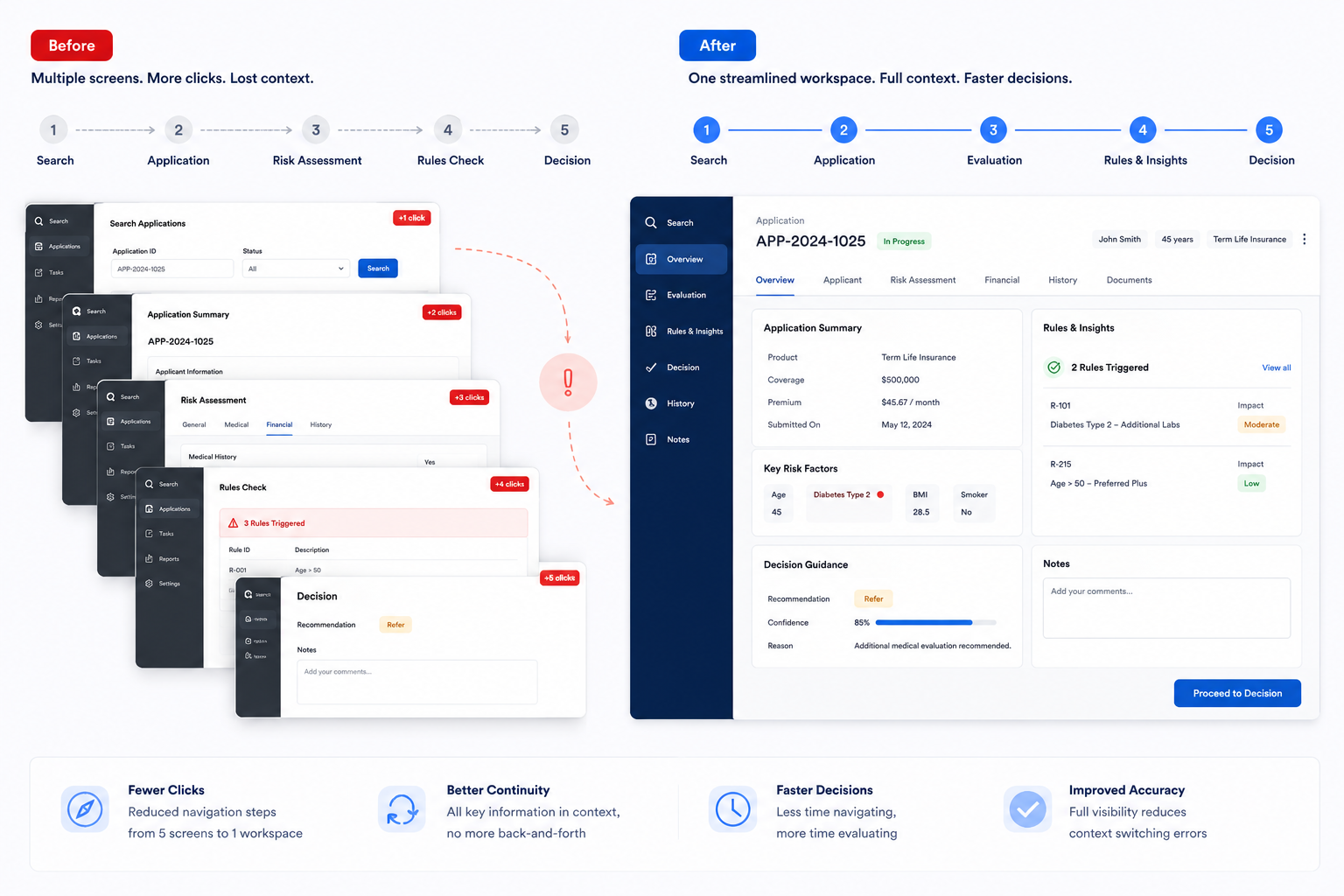
Simplified Workflow Navigation
Reduced unnecessary navigation between related screens and improved task continuity, allowing underwriters to move through evaluations without losing context.
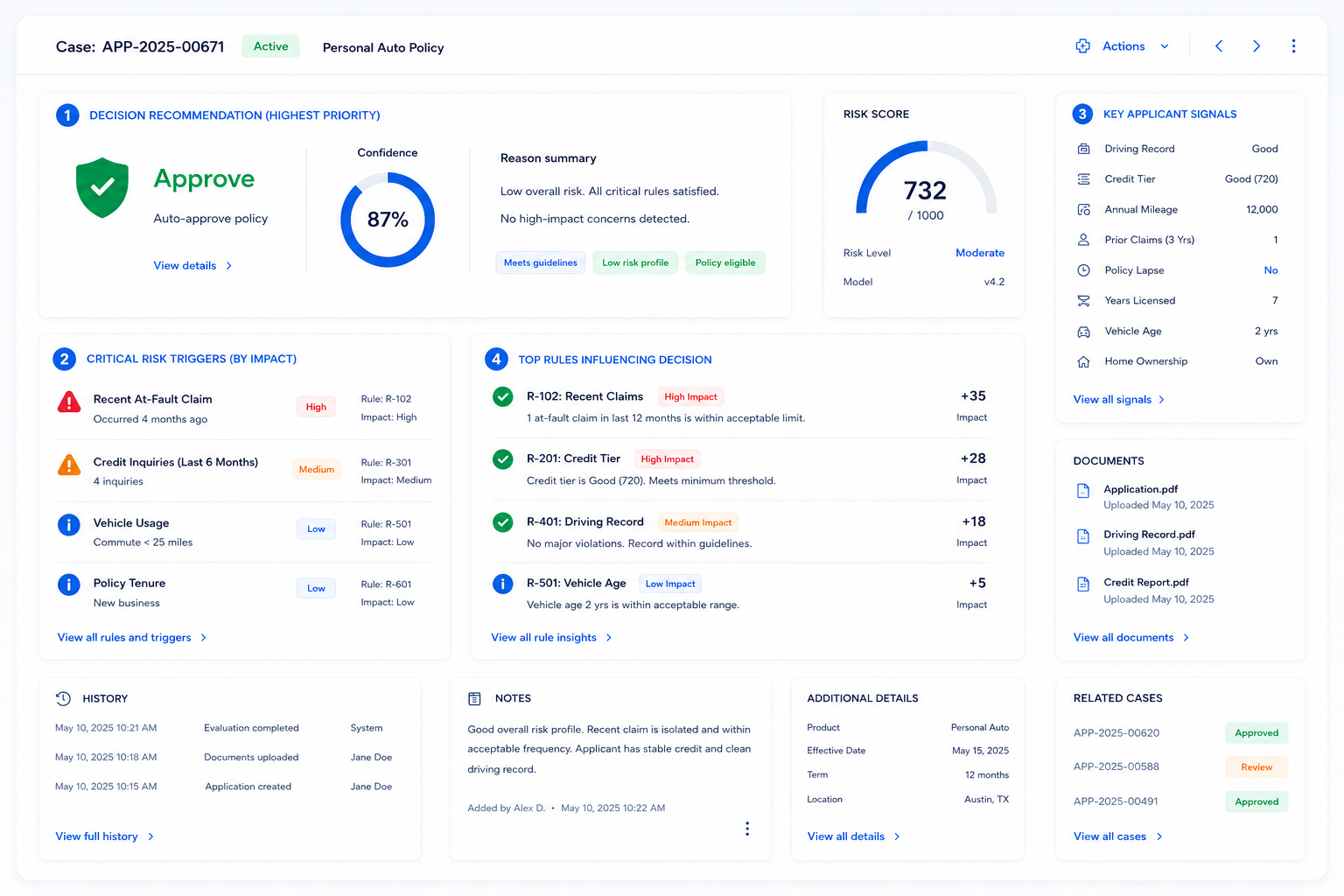
Prioritised Decision Information
Restructured information based on decision impact and task stage, ensuring the most critical data was prominent at every step of the underwriting workflow.
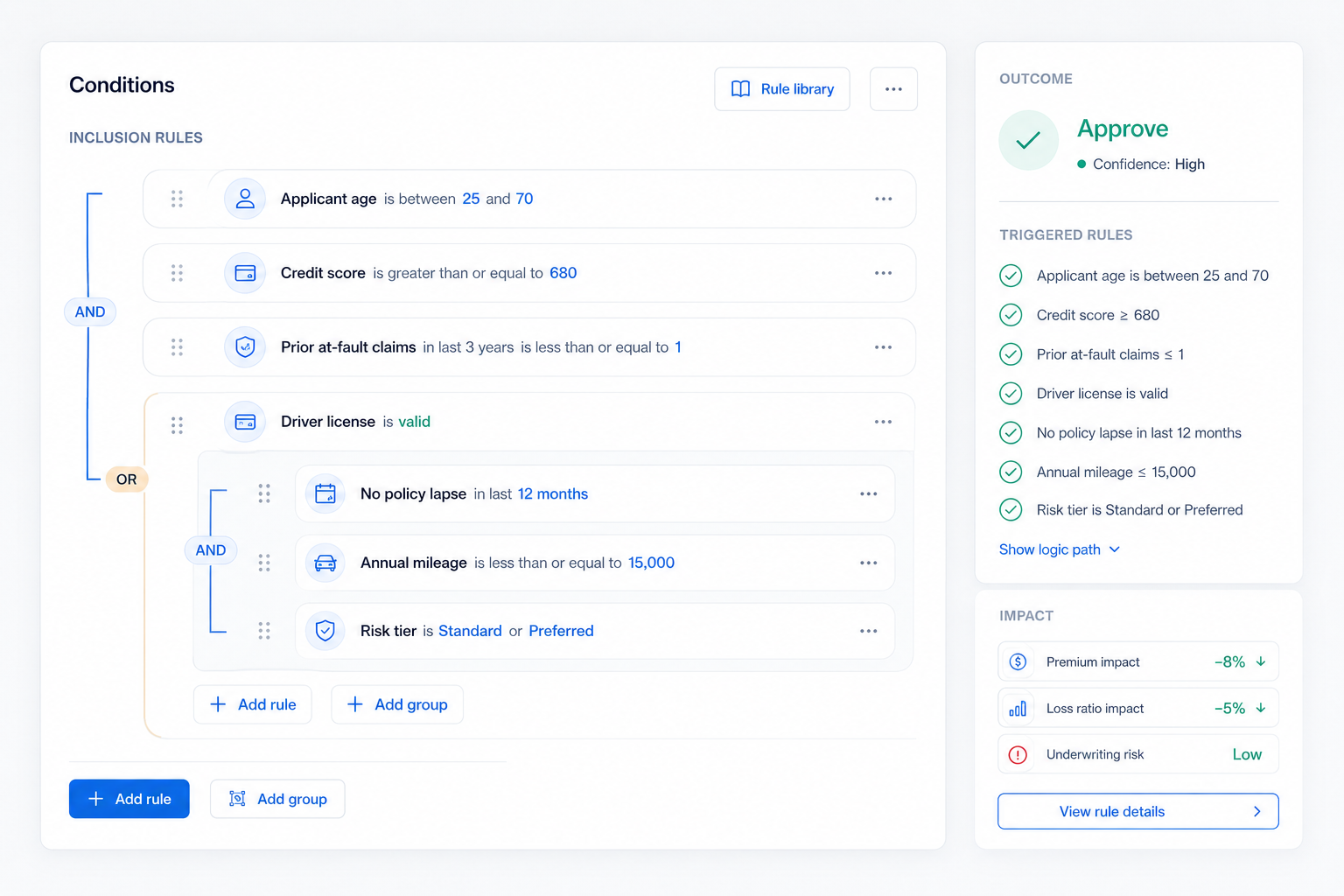
Improved Rules Visibility
Made eligibility criteria and rule outcomes easier to understand, giving underwriters transparency into the logic driving decisions rather than opaque pass/fail results.
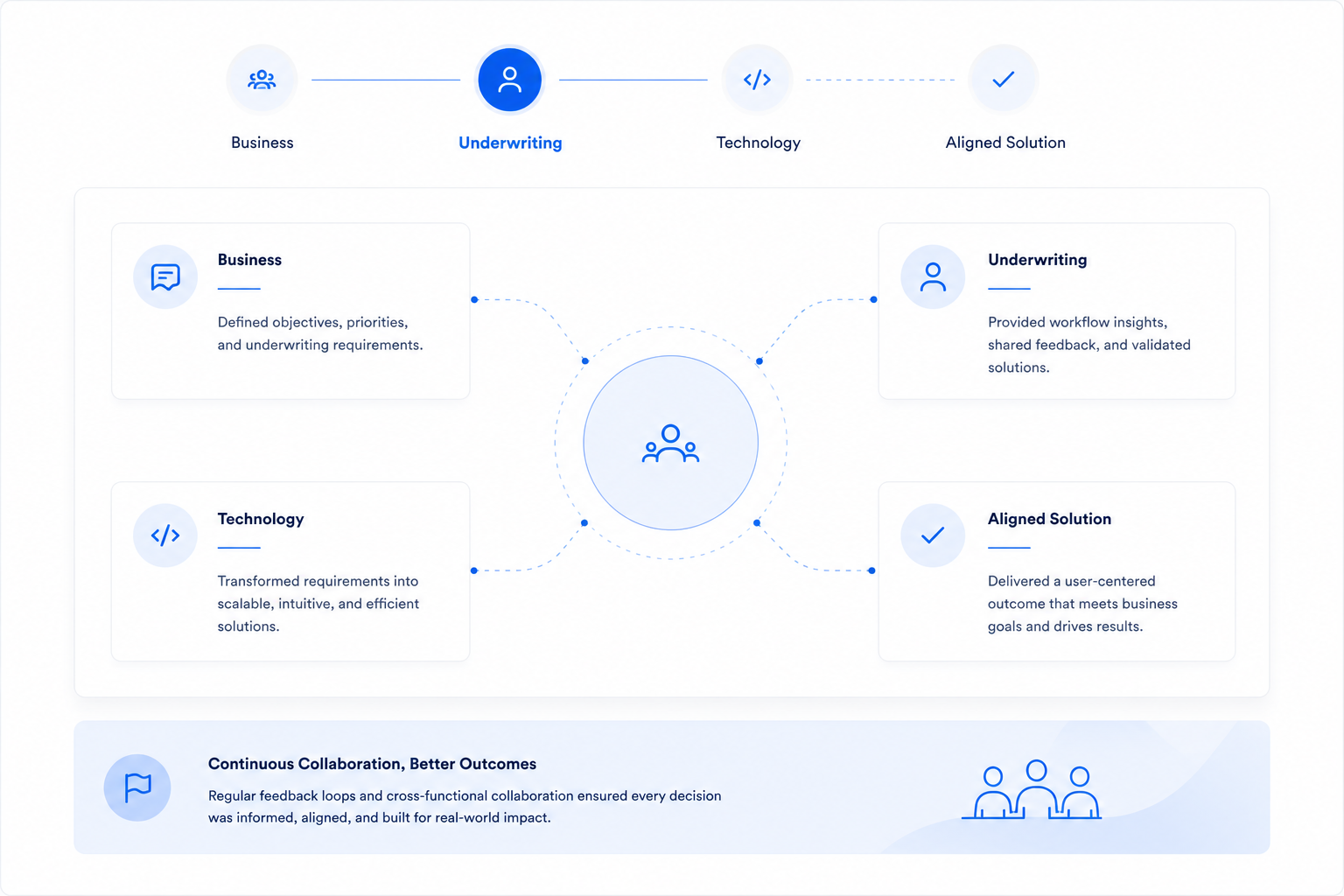
Collaborative Design Approach
Maintained continuous alignment between business, underwriting, and technical stakeholders throughout, ensuring the final solution accurately reflected operational requirements.
My Role
Contributions & ownership
- User interviews
- Stakeholder workshops
- Discovery sessions
- Workflow mapping
- Process analysis
- Requirements synthesis
- Information architecture
- Workflow optimisation
- Prototype development
- Underwriting teams
- Product owners
- Engineering teams
Outcomes & Impact
Results that speak
Reflection
What I learned
For enterprise applications, usability is often less about visual design and more about helping users understand complex information quickly. Deep collaboration with domain experts was essential to translating business logic into intuitive experiences, without that partnership, it would have been impossible to design something that reflected how underwriters actually think.